




Shungite – What is it? Scientific Article About The Russian Stone
Introduction
You are on a website entirely dedicated to shungite stone. My name is Eugene, and I was born and raised in the Republic of Karelia, Russia.
For more than ten years, I have been interested in studying various rocks and stones from my region. One of the most fascinating stones for me has always been shungite. In this article, I will explain what shungite is.
To create this article, we (my team and I) used a large amount of scientific literature by various Russian scientists and geologists. You will find a list of this literature at the end of this article.
A note from the author
After reading this article, you will get the most complete picture of shungite stone. For example, you will learn the scientific definition of this rock, become familiar with all types of this Russian stone, and understand the features of its chemical composition. I will also provide information about its uses, advantages, and properties.
This article turned out to be a little longer than the author originally expected. However, a patient reader who wants to learn more about shungite stone will gain a complete picture of this rare Russian stone.
It is also important to note that our article was originally written in Russian. After that, we translated it into English. In doing so, we relied on our own efforts, the help of an online translator, and our knowledge of English.
Therefore, there is a high probability that you may notice some grammatical or spelling errors throughout this article. Please let us know if you notice any, so that we can correct them. In this way, you will be able to contribute to the further development and improvement of this article.
Table of contents:
- Scientific definition
- The main features
- Where is it found?
- Carbon
- Fullerenes
- What is fullerenes c60
- Types
- Pyrite and Quartz
- Souvenir products
- Chemical composition
- Properties
- Fakes
- Certification
- EMF protection
- Conclusion
What is shungite: Scientific definition
Shungite is an extremely rare, naturally occurring, non-crystalline mineraloid with a unique molecular structure. Its main component is a fullerene substance, an amorphous form of carbon.
The main difference of this Russian rock is the high content of amorphous carbon (fullerene) in its chemical composition. In addition, shungite is also characterized by its unusual properties and unique chemical structure.
Most types of rocks are found in many parts of our planet. In contrast, shungite deposits have been discovered in only one region: the Republic of Karelia in northern Russia. According to various scientific estimates, it is several billion years old. This indicates a complex interaction of biological and geological processes during its formation, potentially related to the decomposition of organic substances such as seaweed.
Main types depending on carbon content
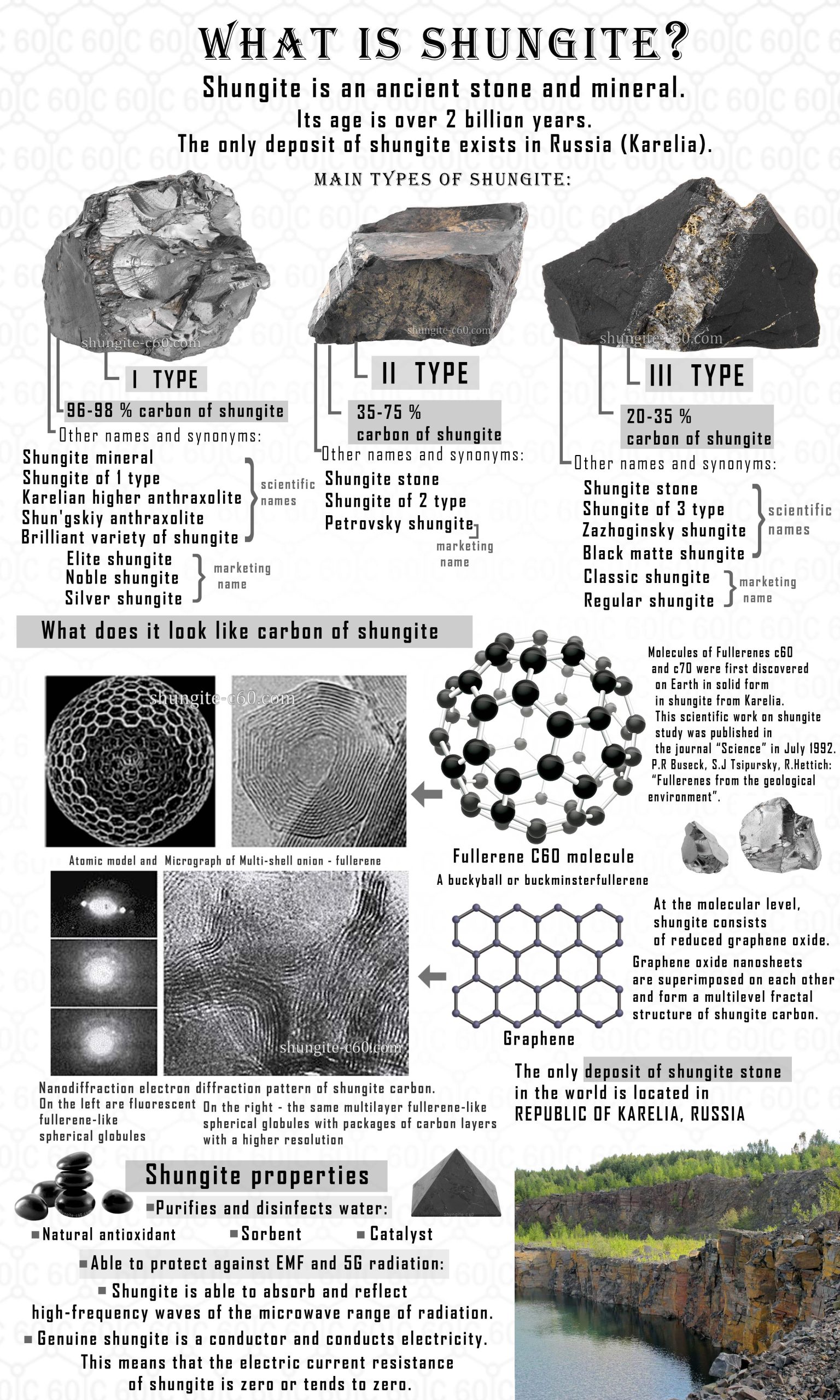
In the scientific community, shungite is divided into three categories. Each category has its own color and carbon content. The higher the percentage of carbon, the more gray and shiny the rock’s surface becomes.
For example, black stones belong to Type 3 and contain about 32% carbon. The second type contains about 60% carbon and has a gray color with a matte, non-reflective surface.
The rarest and most beautiful variety, Type 1, also called elite shungite, has the highest carbon content, up to 98%. As a result, Type 1 has a shiny silver-gray surface that reflects light well. However, it is worth noting that without bright lighting, the surface of this mineral will not appear shiny and may look simply gray.
The physical properties of shungite stone also vary depending on the presence of other minerals in its chemical composition. Below is a complete table of the minerals and chemical elements that make up this rare rock.
It is also important to note that the presence of fullerenes in this rock gives it unique physical and chemical properties not found in other minerals or rocks.
The main features of Shungite rocks
Fullerenes
The presence of fullerenes in the chemical composition of shungite stone rightfully makes it one of the rarest and most unusual minerals in the world. The fact is that fullerenes (allotropic molecular forms of carbon) have been found only in the chemical composition of this rock.
Key Features
This rare Russian rock has beneficial and unusual properties that can be useful not only for humans but also for the environment. Here is a short list of its main and most valuable properties:
- The ability to purify and disinfect water. Similar sorption and antibacterial properties are not found in other rocks. The most effective in this area is black shungite, which is Type 3.
- The absorption of high-frequency electromagnetic waves, the sources of which are various household appliances. These harmful waves are often referred to by the abbreviation EMF. Many people are skeptical about this ability, but this fact has been scientifically proven. In addition, many studies, experiments, and tests in open sources confirm this. Type 3 has also been the subject of these scientific studies.
- The ability to mineralize water and saturate it with fullerenes. This complex molecular form is recognized as one of the most powerful natural antioxidants. Type 1 (elite) shungite stone is considered the most effective in this area. It has the highest percentage of carbon, approximately 98%.
At this stage, you have received the most basic and brief introduction to shungite. We have also learned about its main features. But it is too early to stop. Next, we invite you to get to know this rock as closely as possible.
Where is shungite found?
Deep within the Karelia region of Russia lies the birthplace of shungite, a mineral that has fascinated scientists, geologists, and enthusiasts around the world. This ancient rock formation has an intriguing origin story that adds to its rarity and appeal.
Shungite stone was first discovered near the small village of Shunga, from which it derived its name. Deposits of this extraordinary mineral are primarily found in the Zazhoginsky and Shunginsky areas, nestled within the vast wilderness of the Karelian landscape.
Nature created one of the rarest rock deposits in the world here, among pristine forests and tranquil lakes. This rare rock is found only in one place on Earth: the northwestern region of Russia, the Republic of Karelia.
The Russian black stone is a mineral whose main chemical element is carbon. Most importantly, only this form of carbon contains natural fullerenes. This mineral has unique and unusual properties not found in any other mineral on Earth. According to scientific research, it was formed more than two billion years ago.

Notably, in the Karelian region, outcrops of different types of shungite can be found on the Earth’s surface. At the same time, the most famous deposit of the classic black variety is the Zazhoginsky deposit (also known as Zazhogino). The black rock with the most consistent characteristics is mined there. We also produce various products from this material.
Why is shungite stone considered rare?
The answer lies in its unique composition and formation process. Shungite is composed predominantly of carbon, which distinguishes it from many other rocks and minerals. However, the presence of fullerenes sets this Russian black stone apart. These are specific arrangements of carbon molecules that form hollow spheres, tubes, or ellipsoids.
What makes shungite electrically conductive?
All three types of shungite can conduct electric current. You can check this using any multimeter. The presence of an amorphous form of carbon in the composition of this Russian rock is the reason for this phenomenon. This useful property has led scientific and technical laboratories to explore various technological applications, such as batteries and electronics.

Shungite Carbon
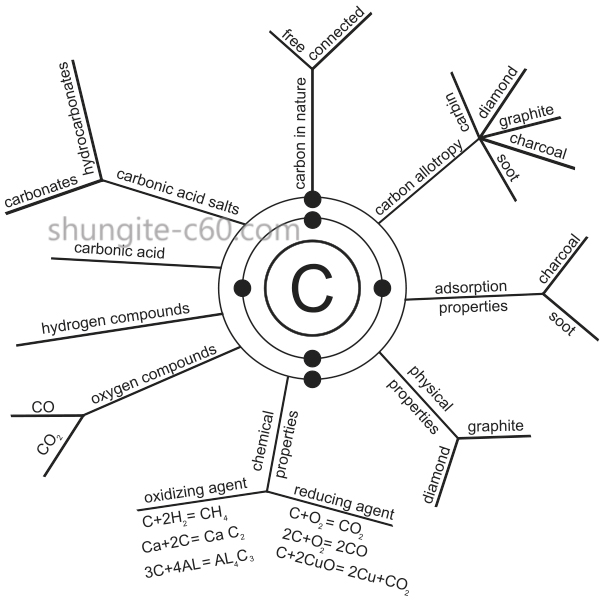
Carbon is a chemical element discovered by the French scientist Antoine Laurent Lavoisier, who is considered one of the founders of modern chemistry. At the time of its discovery, carbon was called “clean coal.” In 1780, carbon appeared in the book Method of Chemical Nomenclature.
After that, the concept of “clean coal” was changed to carbon. Carbon is a chemical element that exists in many allotropic modifications. In modern science, there is a concept of “allotropic modifications of carbon” — substances similar in composition but different in chemical structure.
Fullerenes in Shungite Stone
Shungite, this remarkable carbon-based mineral, intrigues scientists and enthusiasts alike. One key factor contributing to its uniqueness is the presence of fullerenes, molecular structures that have revolutionized the world of chemistry. Let us delve into the significance of fullerenes in this rock and their fascinating properties.
This Russian stone is a rare natural source of fullerenes, which has aroused the interest of the scientific community. Similar molecular compounds have not been found in any other natural substance.
These carbon structures are also known as “globules.” They are the reason for the unique properties of shungite. At present, scientists have managed to create another source of fullerenes, but this source is artificial.
If you are interested in fullerenes and want to learn more about this molecular structure, please read this article.
Types of Shungite: Classifications

Type 3: Regular
First, we will look at the most common type of shungite, which is black and looks like coal. This type is classified as Type 3, classic, or regular. Scientists around the world have become fascinated by this black stone.
This black mineral is very suitable for processing and is best suited for the manufacture of various souvenir products. In addition, when we talk about the ability to purify water and protect against electromagnetic waves of different frequencies, we are referring specifically to this black mineral, Type 3.

On the territory of Karelia, there are many different types of shungite. For their classification, a simple scheme based on the carbon content of the rock is used (P. A. Borisov). However, there are also other ways of classifying these ancient Precambrian rocks proposed by other researchers, which more fully reflect the nature of the material. They consider the rocks in terms of their chemical composition, history, and formation conditions.
In addition, the very scientific definition of this Russian rock has changed over time and has varied among different researchers. Moreover, depending on its carbon content, scientists may classify it as a rock or a mineraloid, but not as a gem.
Type 2: Petrovsky
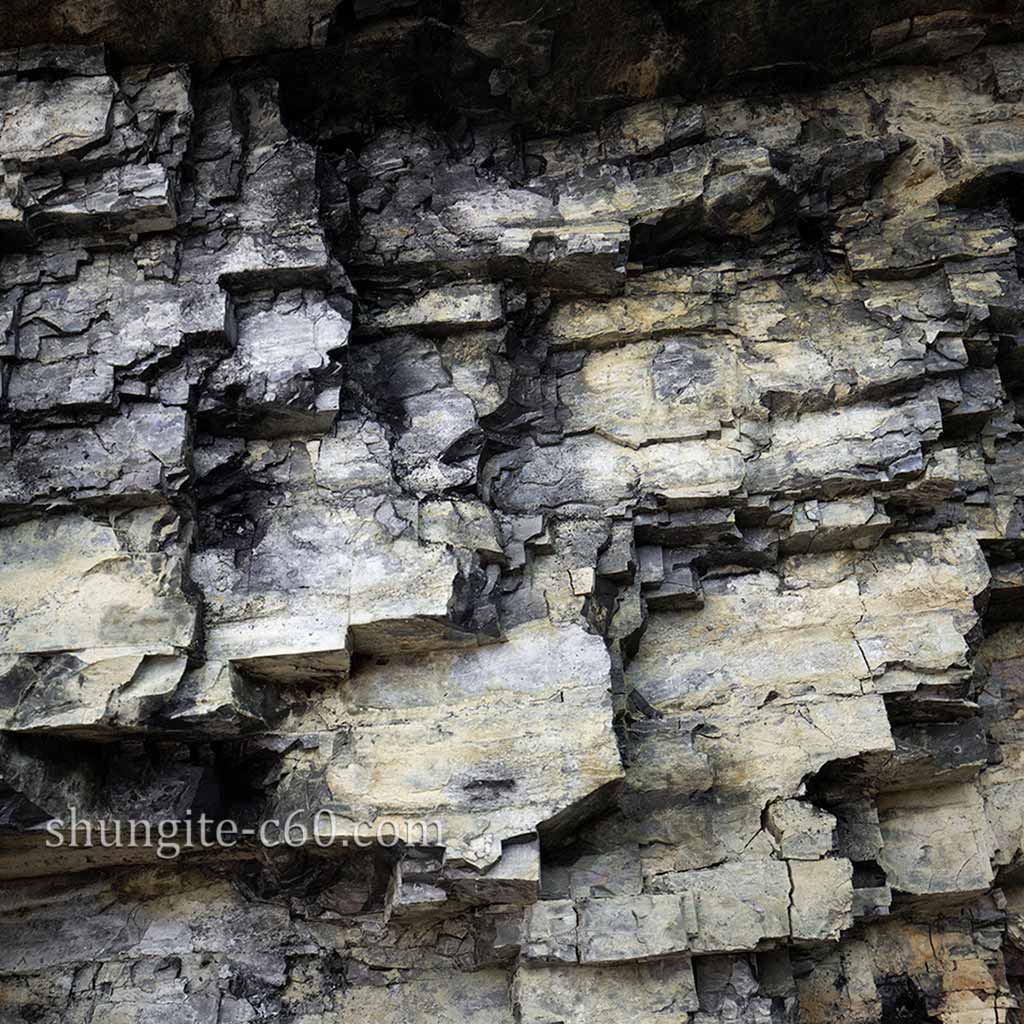
Petrovsky shungite occurs in the Shunga deposit and contains 35–75% of unique carbon. This mineral type occupies a middle position between the first and third types in terms of reserves. Its reserves are much smaller than those of Type 3 stone, but larger than those of Type 1.
Type 2 rock has a gray, matte, low-gloss graphite color and parallelepiped jointing. The photo shows that the gray stone appears to be divided into rectangles or cubes. These external characteristics reminded geologists of anthracite. Therefore, at first, they called this shungite “Onega anthracite” (after the name of Lake Onega).
Due to its external resemblance to anthracite coal, the study of this rock in the Russian Empire began intensively in 1877. However, it later became clear that this Russian black stone was not coal and was economically unsuitable for heating furnaces.
An important fact is that we do not process Petrovsky material to make stone products in Karelia. Neither we nor other production facilities can process it on an industrial scale and make products from it because of the physicochemical properties of Type 2. In addition, we know that the reserves of this gray stone are very limited. Therefore, at present, we offer nuggets of Petrovsky shungite only for collections.
Type 1: Elite Silver rock
Finally, we come to the silver Type 1 shungite, thanks to which this rare Karelian rock has become known worldwide. Scientists classify this variety as Type 1 shungite stone. On the Internet, sellers also call it “elite” or noble shungite.
First, I would like to note that it is almost pure, unique carbon (98–99%). The structure of this carbon is very similar to the carbon structure of the Allende meteorite. Until now, there has been no exact scientific explanation for the origin of Type 1.
Also, the carbon form of this rare mineral has nothing in common with other forms of carbon found on Earth. Some scientists have suggested that this unique mineral could have come to Earth from space. However, other scientists believe that silver shungite is of terrestrial origin. Type 1 silver shungite, one of the three main types, was formed over millions and billions of years.
What does type 1 Shungite stone look like?

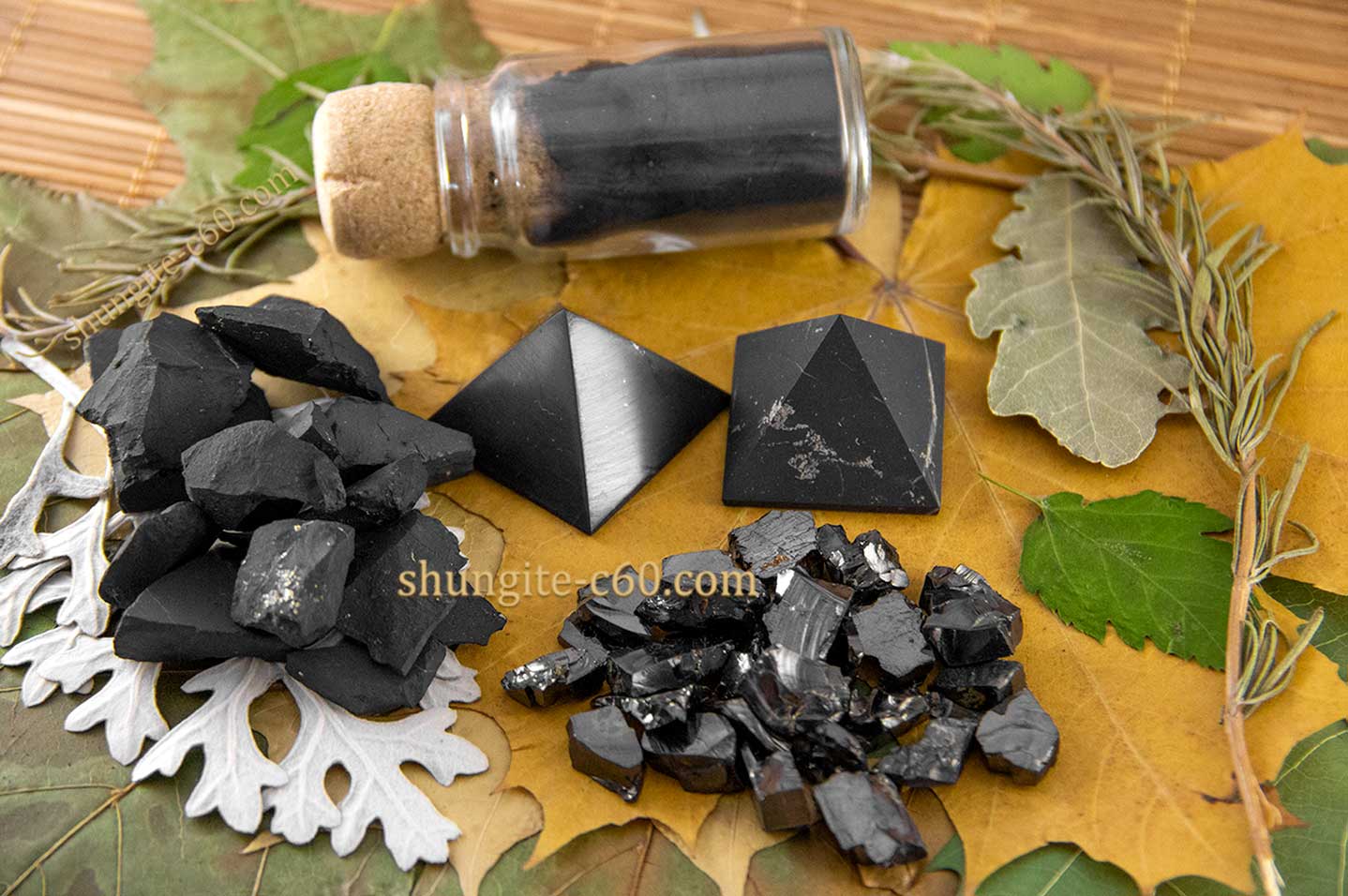
Shungite stone Type 1 is silver-gray; its surface is smooth to the touch and reflects light. At the same time, slight inclusions of accompanying minerals can also be seen on its surface. Above all, some minerals that are part of genuine elite shungite can leave traces of rust on the surface.
For example, pyrite can leave traces of rust when it oxidizes in contact with oxygen. There is no need to be afraid of this phenomenon, because rust is a natural feature of this silver mineral. However, you can clean the stone with a stiff brush and water. Please see what genuine elite rocks look like in our elite Type 1 section.
Type 1: Rock Deposit

It is an extremely rare mineral. Indeed, back in the days of the USSR, a mining enterprise practically exhausted the resources of Type 1 shungite. The name of the mineral is associated with the village of Shun’ga, where it was first discovered. Currently, each piece is extracted by hand. In the near future, this unique mineral, one of the rarest and most remarkable, may cease to exist in its natural environment. Learn more about silver Russian stone type 1 ←(click here)
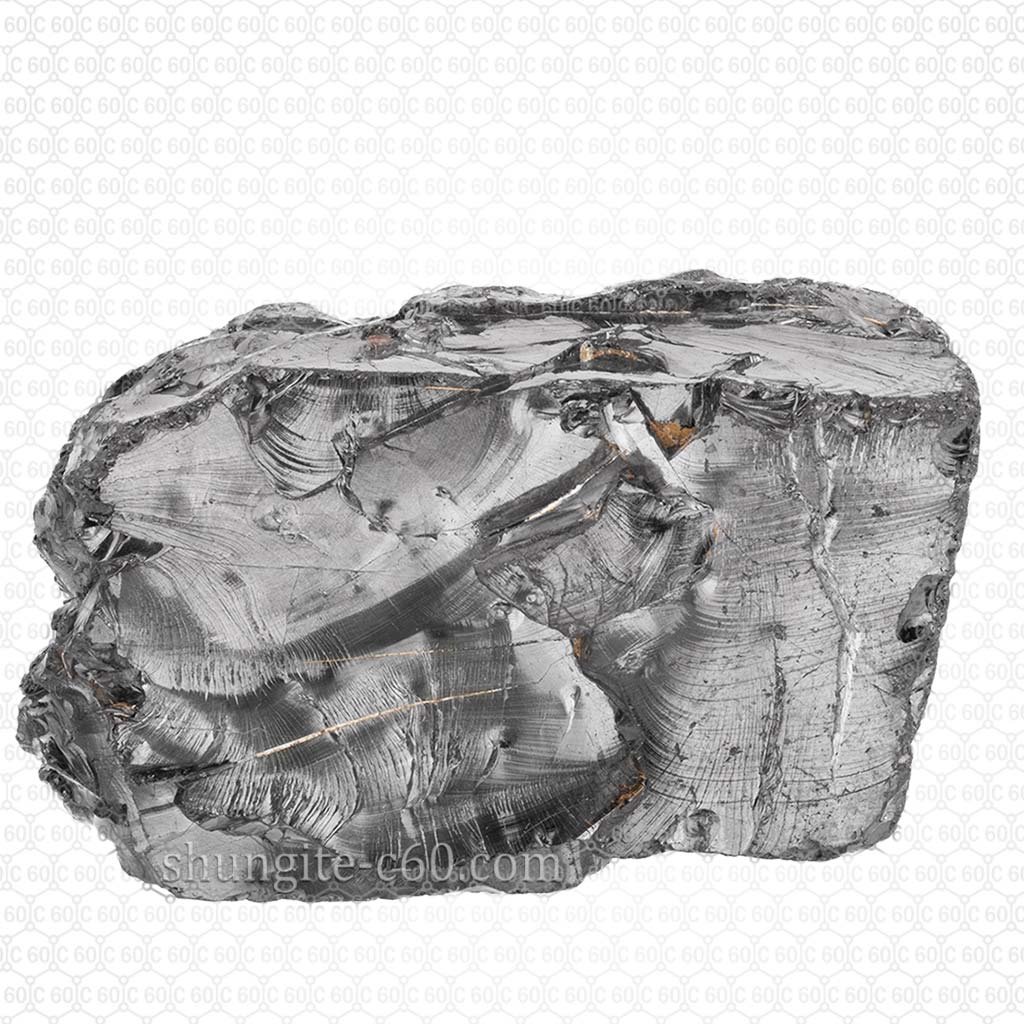
Please note that this rare silver elite mineral is the rarest of all three types. We extracted every piece of this noble silver stone ourselves. See what real Type 1 shungite stones look like in our collection. I guarantee that you will receive only authentic stones from Karelia. In addition, we are located directly in the Republic of Karelia and personally create all the products for our store. Therefore, you can receive only genuine products made from rare Russian stone. Lately, we have been providing even faster delivery. Our catalog shows the full range of natural samples of this Russian silver stone with 98% carbon.
Shungite stone from Colombia
Any minerals from Colombia cannot be considered authentic shungite stones. A mineral similar to Type 1 silver shungite is mined in Colombia. However, the Colombian stone is anthracite, not higher anthraxolite. This mineral is not shungite. Because of its similarity to silver Russian minerals, even specialists sometimes confuse them during visual inspection.
You can use an electrical conductivity test to identify fake stones from Colombia. The values on a multimeter for Colombian stones are usually 15 or higher, which indicates lower electrical conductivity. By contrast, Russian Type 1 stone usually shows a value close to zero. You can learn more about Colombian fakes in this article.
Pyrite and Quartzite in Shungite Stone
The black Russian stone has interesting companions within its geological formation. Two commonly occurring minerals in the structure of this black rock are pyrite and quartz. Let us delve into the significance of pyrite and quartz in the context of shungite and the unique characteristics they bring to this intriguing mineral.
Pyrite in Shungite
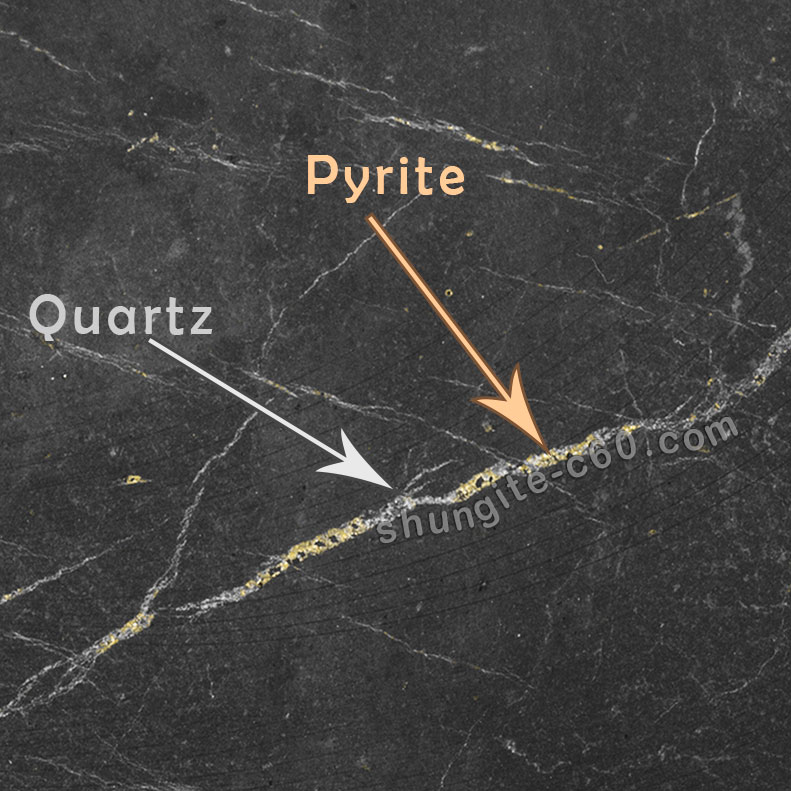
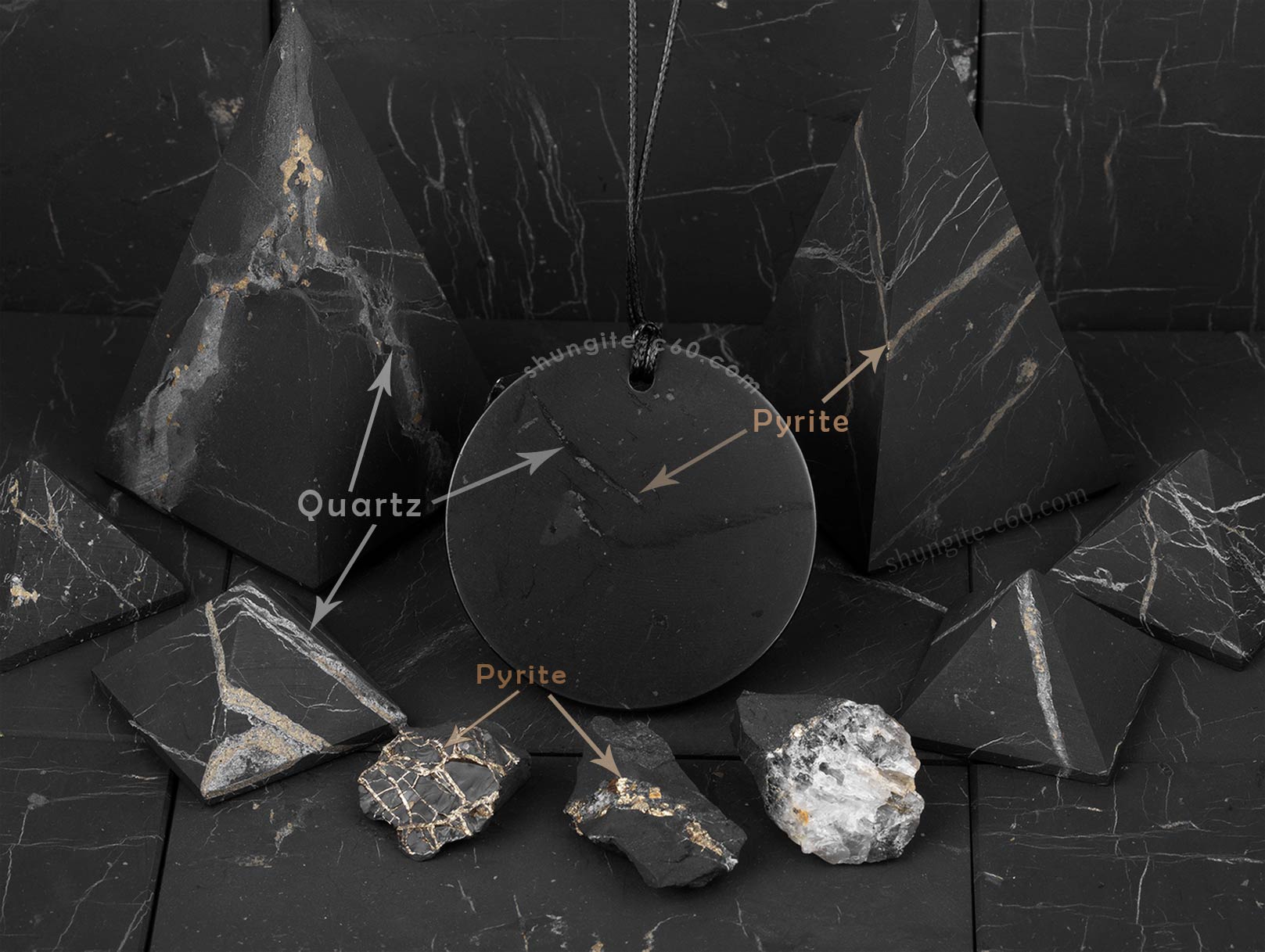
Pyrite is a compound of iron and sulfur. It is yellow in color and looks somewhat like gold. This mineral is notable because, in the structure of shungite, like quartz, it occurs in the form of veins. Such streaks are often confused with scratches, especially when they are visible on souvenirs, for example, on engraved pendants made of shungite stone. The veins of pyrite give each stone or product its own uniqueness. After all, these patterns are never repeated.
In addition to its visual appeal, pyrite is also associated with metaphysical properties, like many other minerals. It is believed to have protective qualities and to protect against negative energy. Pyrite products are also used as a symbol of prosperity and good luck.
Quartz
Quartz is a hard mineral that can occur in many colors and shades. It is one of the most common minerals on Earth. It can be transparent or have a milky shade that does not let light pass through. Due to the contrast of white quartz against the black surface of shungite, jewelry and decorative products have a beautiful and harmonious appearance.
It is worth noting that quartz does not conduct electric current. Therefore, tests of the electrical conductivity of shungite are sometimes inaccurate when the measurement passes through veins of quartz. Like pyrite, quartz runs through the entire structure of this Russian rock in veins that may resemble scratches.
The beauty and uniqueness of the natural pattern
Pyrite and quartz coexist with shungite stone, creating an intriguing combination of aesthetics and natural character. The protective and purifying symbolism of pyrite, together with the clarifying and amplifying qualities traditionally associated with quartz, can create a powerful combination.

It is worth noting that the presence and composition of pyrite and quartz in shungite stone can vary. Some deposits may have higher concentrations of these minerals, while others may show them less prominently. The specific characteristics and effects of these minerals within the black rock remain a subject of ongoing study and personal interpretation.
Shungite stone with a characteristic pattern of Quartz and Pyrite
For example, we make various pendants of unique geometric shapes from the third type of shungite. We also engrave our round pendants. Of course, the natural distinctive features of black shungite, with visible traces of quartz and pyrite, also serve as proof of the authenticity of our pendants. We polish our pendants to make them look shiny. Unlike fake black pendants, our Karelian stone pendants are safe for the skin.
This is what makes rare black Karelian stone different from similar rocks mined in many countries. Other rocks are called “carbon-containing.” They do not contain fullerenes, and they do not contain unique carbon C60. Such minerals are very cheap and do not have the same unique properties. Very often, such rocks, which are only superficially similar, can be passed off as real Karelian shungite stone. After the discovery of the unique and useful properties of this ancient black mineral, too many imitations began to appear.
Features of Shungite products
The scarcity of shungite has sparked great interest and demand, especially in recent years. Its reputation as a natural healer, water purifier, and shield against electromagnetic radiation has elevated its status in wellness and holistic health communities. The rare and ancient nature of shungite stone only adds to its mystique and appeal, making it a prized possession for those seeking balance and harmony.

The main feature of genuine shungite products is the presence of two minerals, pyrite and quartz. The veins of these two minerals can often be seen on the surface of black stone products. This is a distinctive and visually noticeable feature that helps distinguish authentic Russian minerals from fakes.
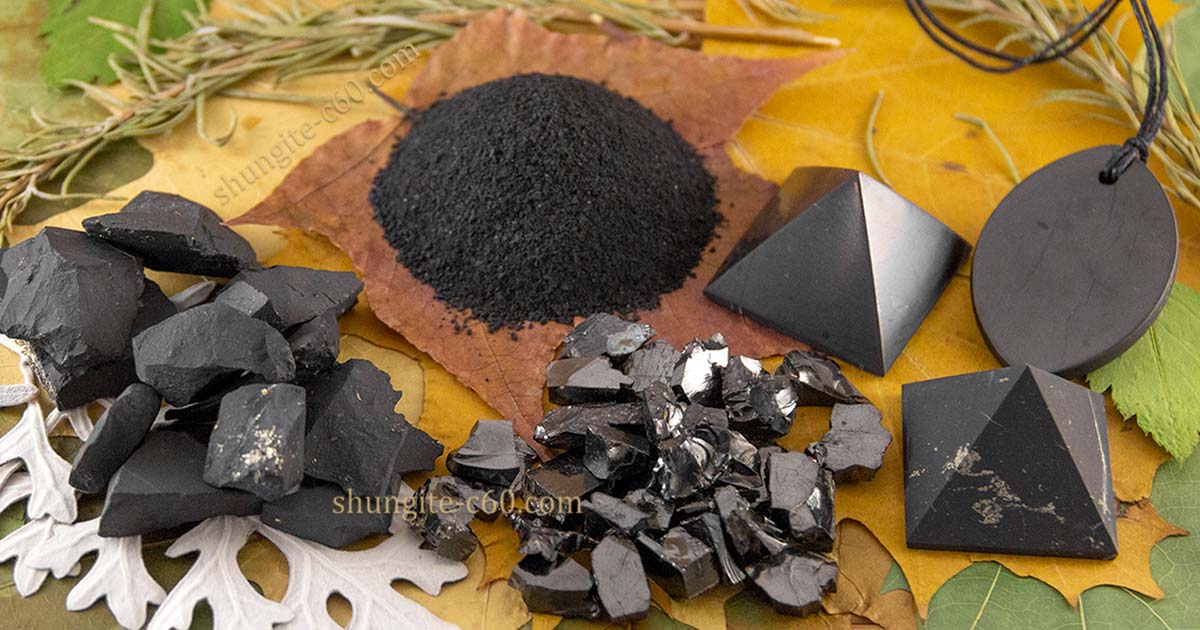
We produce an extensive range of souvenirs in various geometric shapes: pyramids, spheres, cubes, phone plates, pendants, harmonizers, tableware, and more.
Premium quality but unnatural fake stone
We know that some sellers use stamped factory molds and mixtures of shungite stone dust, resin, and other impurities. Their products look perfect and have impressively smooth, symmetrical sides. But is this real natural Russian stone? No, it is a pressed product made of black resin, orgonite, adhesive composite materials, and plastic powder.
We have been manufacturing our products for more than five years, and our mission is to create products made only from natural shungite. At the same time, we continue to improve our stone-cutting technique and craftsmanship. Our products are hand-cut from solid pieces of raw Karelian black stone.
We constantly strive to achieve a result in which our products are both beautiful and truly handmade from natural stone.
Shungite: Chemical composition
The chemical composition table below shows the average content of the main rock-forming components in Type 3 shungite. The greatest variations in the content of mineral constituents relate to CaO, Na2O, MgO, and FeO. However, the chemical and mineral composition varies depending on the physical structure of this Russian black stone. It changes due to the density of the shungite, fractures, the degree of brecciation, and other factors.
| Chemical components | First Pack (34 samples) | Second pack (135 samples) |
| SiO2 | 32,3 | 51,6 |
| С | 37,0 | 29,2 |
| Al2O3 | 8,5 | 4,27 |
| Fe2O3 | 2,7 | 3,01 |
| FeO | 4,2 | 0,44 |
| CaO | 3,1 | 1,45 |
| MgO | 2,8 | 1,92 |
| Na2O | 2,2 | 0,18 |
| K2O | 1,0 | 1,44 |
| S | 1,9 | 1,18 |
| TiO2 | 0,6 | 0,36 |
This chemical analysis concerns the horizons of carbon-bearing rocks in the central part of the Zaonezhskaya suite. The geological section of these rocks is sedimentary-volcanogenic. These layers are significant zones of accumulation of shungite organic matter. This analysis was carried out by scientists at the Institute of Geology of the Karelian Academy of Sciences.
In addition, the thickness of the first pack bed is 160–210 meters (3 cycles of organic matter accumulation). The second pack occurs at a depth of 210–240 meters (6 cycles of organic matter accumulation).
What metals are in shungite?
You can see all the chemical elements, including the metals that make up shungite stone, in the table above. Let us briefly decipher the chemical formulas of these essential components:
- SiO2 – Silicon Oxide
- С – Carbon (the amorphous form)
- Al2O3 – Aluminum Oxide
- Fe2O3 – Iron oxide
In this list, we have included only the most essential chemical elements that make up the majority of shungite. However, this mineral contains almost the entire periodic table. Above all, it is important to note that although some chemical elements can be harmful to humans, this rock is safe for humans, animals, and plants.
In other words, everything a person consumes, including water and food, also contains many chemical elements. That is why it is essential to consider the concentration of potentially harmful elements. In shungite, these elements are present at levels several hundred or even thousands of times lower than harmful limits.
Is shungite activated charcoal?
No, shungite is similar to activated carbon and has a comparable sorption capacity. Like activated carbon, it can absorb harmful impurities from water. These materials are used in water treatment systems in central urban water supply networks.
Enterprises also widely use them to purify water from various chemical contaminants. It has been scientifically proven that shungite is superior to activated carbon in terms of efficiency and duration of use.
On the other hand, shungite, especially Type 3 in its raw form, is very similar to coal. Unlike activated carbon, this Russian stone was not created artificially; on the contrary, it is a natural mineral.
Shungite fakes
The more people learn about shungite, the more fakes appear on the market. Due to its beneficial properties and rarity, this Russian mineral has attracted the attention of many unscrupulous sellers. Counterfeit products posing as authentic stones from Russia have appeared. Therefore, it is important to know that not every black or silver-colored product labeled as shungite is genuine.
Fake shungite refers to minerals or artificial materials that imitate the appearance of authentic stone but do not possess its properties. These imitations can be made from synthetic rubber, plastic, or orgonite. The factory-stamped forms of these fakes may look attractive, but they are not shungite.
The main reason for fakes
The primary reason for the spread of fakes is the limited supply of authentic shungite stone on the market. The rarity and geological uniqueness of genuine Russian stone make it difficult to source in large quantities. This scarcity creates an opportunity for unscrupulous sellers to exploit demand by offering counterfeit products that resemble the stone but lack its inherent qualities.
Thus, the e-commerce market for this valuable black Karelian mineral from Russia is filled with forgeries. We want our customers to be protected from counterfeits, and we remind you that the only genuine shungite stone deposit is located in our region, the Republic of Karelia, Russia.
Other countries also have deposits of similar black rocks. However, this is not genuine Russian shungite. As a result, such rocks do not have the same unique and beneficial properties as our stones from Karelia.
One of the ways to check shungite for authenticity
This rare mineral from Karelia has a high luster, contains fullerenes, and conducts electricity. This means that the resistance of real shungite tends toward zero, making it practically a conductor. The conductivity of this mineral is very high and can be checked with a lamp test or a multimeter. Fakes do not have the properties of this genuinely unique mineral.
However, time does not stand still, and many sellers have learned to use conductive compounds in their fakes.
Thus, to ensure the authenticity of Karelian stone, it is necessary to purchase this mineral only from a trusted manufacturer with the appropriate Russian state certificates and laboratory test results. You can view our certificates and research results on this page. In addition, we have created a separate article in which we discuss forgeries in great detail. Learn more about fakes.
Properties of Shungite Stone
The main properties of shungite are listed at the beginning of this article. In this section, we will discuss several more valuable properties of this rock.

Physical Properties
Its physical properties make it possible to manufacture various products from shungite. For example, tiles for EMF shielding of premises, electrically conductive paints, jewelry, and souvenirs. Various fractions of raw black stone are also used in agriculture as a mineral additive and in water purification for public utility services.
Chemical properties
The chemical properties of shungite stone allow it to be used in various fields, such as:
- Catalysts in the chemical industry
- Use in filters for water purification from organic substances
- Reducing material for the chemical structure of the liquid medium
- As an additive in industry to obtain the required qualities for the products. For example, as an additive cast iron (Fe+C)
Thus, various valuable properties of shungite allow it to be used in such areas as:
- Production of building materials
- Use in the chemical industry
- Energy
- Metallurgy
- In wellness therapy
- Agriculture
- In the craft of making jewelry and souvenirs
- Water supply
- In medicine
- In the field of environmental protection
Features of use
It is also worth noting that although shungite can provide a certain level of protection against EMF, it should not be considered the only solution for minimizing the effects of EMF. Responsible use of devices, such as keeping a reasonable distance, using hands-free functions, and reducing screen time, is equally important for minimizing the potential risks associated with EMF.
As with any product, each person’s individual experience may vary. We receive many positive letters from our clients saying that their well-being has improved significantly since shungite appeared in their home. But we also receive some reports that certain clients feel anxiety or discomfort when shungite is kept close to their bed. Therefore, you should monitor your well-being and keep stone products farther away from your bed.
Shungite Certification
As we mentioned earlier, the market is overflowing with fakes. In this case, it is essential to have some form of confirmation or guarantee of authenticity. It is important to note that such guarantees must be official and verifiable through official sources.
All our shungite products have a certificate of conformity in accordance with Russian legislation.
We also have the results of scientific laboratory studies of our products and guarantee the authenticity of every product on our website. Many sellers can provide only documents printed at home or created in Photoshop. Such documents are not registered in official certification databases. Our certificate is listed in the unified register of Russian voluntary certificates and has a unique registration number.
Who is authorized to issue certificates?
Certified shungite undergoes a comprehensive evaluation process carried out by recognized geological institutes or independent laboratories specializing in mineral analysis. This process involves testing the stone for its carbon content, the presence of fullerenes, mineral composition, and other relevant parameters.
The aim is to ensure that the certified shungite is genuine and possesses the unique properties of this remarkable mineral.
Many sellers print certificates at home using their own printers. But does such a certificate really have any value or inspire trust?
You can have confidence in its authenticity by choosing officially certified shungite. This reduces the risk of falling victim to counterfeit or diluted products that may be presented as shungite stone but lack its inherent qualities. The certification process serves as a safeguard, helping ensure that you are purchasing the real material.
Cheap fakes and genuine products
While certified shungite may come at a slightly higher price, the assurance of authenticity, quality, and peace of mind makes it a worthwhile investment. You can be confident that you will receive genuine Karelian stone with all its extraordinary properties and potential benefits intact.
Specifics of certification in Russia
Please note that shungite in the Russian Federation is not subject to mandatory certification. Therefore, many unscrupulous sellers from other cities in Russia and from other countries sell carbon-containing rocks under the guise of being genuine shungite.
However, this does not mean that voluntary certification of shungite stone products is impossible. That is why we have obtained voluntary certification for our products. Our company has cooperated with regular customers for a long time and is ready to offer them high-quality products while guaranteeing the authenticity of each item.
Conclusion
So, we have come to the end of this extensive article. We sincerely hope that you will appreciate our work. We have done a great deal of work and studied a large amount of Russian scientific literature in order to tell you about the most essential aspects of shungite. By now, you should have a complete idea of what shungite is. You have learned what this Russian rock is and what types of shungite exist.
In addition, you have learned about its primary and secondary properties, advantages, applications, and chemical composition. This Russian stone contains a rare and unique form of carbon known as fullerene. The presence of this molecular structure gives shungite all the properties described in this article.
Do not forget that only authentic certified shungite stone from Russia has these advantages. We hope that all this knowledge and information will help you make the right choice and avoid unpleasant situations involving fakes.
FAQ About Shungite
Quick and honest answers to the most important questions about shungite, its origin, types, properties, and authenticity.
The list of scientific literature that was used to create this article:
- Yushkin, N.P. (1994). Globular supramolecular structure of shungite: data from scanning tunneling microscopy. Doklady Akademii Nauk, 337(6), 800–803. [in Russian].
- Sokolov, V.A., Kalinin, Yu.K., & Dyukkiev, E.F. (Eds.). (1984). Shungite—A New Carbonaceous Raw Material. Petrozavodsk: Karelia. [in Russian].
- Emelyanov, S., Kuzmenko, A., Rodionov, V., & Dobromyslov, M. (2013). Mechanisms of Microwave Absorption in Carbon Compounds from Shungite. Journal of Nano- and Electronic Physics, 5(4), 04023-1–04023-3.
- Antonets, I., Golubev, E., Shavrov, V., & Shcheglov, V. (2017). The model presentation of microstructure, conductivity and microwave properties of graphene-containing shungite. Journal of Radio Electronics, 9, 1–64.
- Lyn’kov, L.M., Borbot’ko, T.V., & Krishtopova, E.A. (2009). Radio-absorbing properties of nickel-containing shungite powder. Technical Physics Letters, 35, 410–411. doi:10.1134/S1063785009050071.
- Abdulhadi, H.D.A., Belousova, E.S., Prudnik, A.M., & Lynkou, L.M. (2019). Mechanical and electromagnetic properties of shields on the base of needle-punched material with conductive and dielectric coatings. Proceedings of the National Academy of Sciences of Belarus. Physical-Technical Series, 64(1), 44–50.
- Zavodinsky, V.G., & Kuz’menko, A.P. (2018). Electronic structure of complexes consisted of fullerenes, their fragments, and silicon dioxide nanoparticles. Computational Nanotechnology, 2, 46–48.
- Meng, F., Wang, H., Huang, F., Guo, Y., Wang, Z., Hui, D., & Zhou, Z. (2018). Graphene-based microwave absorbing composites: A review and prospective. Composites Part B: Engineering, 137, 260–277. doi:10.1016/j.compositesb.2017.11.023.